In the workplace of the 21st century, where the world has become digitally interconnected, access to work is no longer a problem but rather the ability to control it. Modern professionals operate in an environment defined by constant notifications, hybrid collaboration, and growing performance expectations. Consequently, time and work management have evolved from a rudimentary organizational skill into a strategic competency, which is directly proportional to productivity, quality of output, and career development in the long term.
According to the findings of the Atlassian Productivity Insights, knowledge workers lose a significant amount of productive time each week because of the disjointed workflows and poor coordination of tasks. To add to this, researchers in Harvard Business Review and McKinsey have all found that having structured time management at work enhances deep focus, reduces burnout, and improves decision-making efficiency.
This article describes eight empirically tested time management techniques designed to help professionals take control of their workday while aligning with modern workplace realities. These techniques include time structuring methods, prioritization frameworks, focus strategies, and workflow systems.
Read More: What is Work Order Management Software & How Does It Work?
Why Time and Work Management Matters in Modern Workplaces
- Productivity and Output Quality
McKinsey estimates that almost 60 percent of the time that employees spend at work is coordination rather than high-value work. Time and work management helps redistribute effort toward high-value activities, improving efficiency and deliverables.
- Cognitive Load and Attention Management
The American Psychological Association has established that task switching can lower productivity to a point of 40 percent. Organized time management at work reduces cognitive overload and aids in long-term attention.
- Workflow Optimisation in Hybrid Work
The hybrid environments require asynchronous coordination. Given that there are no organized systems of scheduling, there are bound to be delays and communication lapses.
- Burnout Prevention
Ineffective time management results in work-related stress and increased working hours. Time management strategies help build sustainable work patterns.
Read More: Best AI Project Management Tools in 2026: Expert Picks
Time Blocking
How It Works
Time blocking is the division of the workday into fixed time blocks, which are assigned to a particular activity or type of work.
Why It Works
Such an approach helps to decrease the fatigue in decision-making and avoid reactive work patterns. According to research gathered by Harvard Business Review, the structured scheduling enhances the rate of completing the tasks and concentration.
When to Use
- In those positions that must involve deep work (writing, coding, strategy)
- When the project is of high priority, and the cycle is high
Workplace Example
A content strategist can reserve 9:00–11:00 AM to conduct research, 11:30–1:00 PM for writing, and late afternoon hours for meetings and revisions.
The Eisenhower Matrix
How It Works
There are four quadrants of tasks, namely:
- Urgent & Important
- Critical Yet Not Emergent.
- Emergent but Not Critical.
- Neither
Why It Works
This framework involves prioritization, which is based on impact as opposed to urgency bias. According to McKinsey research, the high performers concentrate more on the important yet not urgent work.
When to Use
- In situations where the workload seems to be overwhelming.
- In the strategic planning and leadership functions.
Workplace Example
A manager can differentiate between immediate escalations of clients (urgent) and process (important but not urgent) improvements.
The Pomodoro Technique
How It Works
The work is separated into periods (usually 25 minutes), and short breaks are provided.
Why It Works
According to the American Psychological Association, attention spans deteriorate over time without structured breaks. This is a method that employs the use of the cognitive recovery cycles to ensure the idea of being productive.
When to Use
- In case that the task is repetitive or of a mental nature.
- In case of difficulty in procrastination.
Workplace Example
Four Pomodoro cycles are used by a developer to finish with the debugging work and then a more significant pause to refocus.
Prioritisation Frameworks (e.g., ABCDE Method)
How It Works
The prioritization of tasks is done in the order of importance:
- A: Critical
- B: Important
- C: Nice to have
- D: Delegate
- E: Eliminate
Why It Works
Closely related to the effort is structured prioritization, which matches the effort to results. According to Atlassian research, prioritization can help in minimizing the amount of wasted effort in cases where there is a clear prioritization.
When to Use
- At the beginning of the working day.
- At the planning stages of the projects.
Workplace Example
A marketing team consists of the priorities of campaign launch deliverables (A) and internal reporting tasks (C).
Single-Tasking and Deep Work
How It Works
Focus is placed on completing one task without interruptions.
Why It Works
The American Psychological Association has proven that multitasking makes one less efficient and prone to errors. Deep work improves the level of cognitive performance and output.
When to Use
- In the case of analytical, creative, or strategic work.
- In case of critical accuracy.
Workplace Example
Notifications are disabled by a financial analyst in the creation of a quarterly report so that no error is made.
Task Batching
How It Works
The tasks that are similar are put together and done during special time slots.
Why It Works
Task batching minimizes context switching, which is a significant drain on productivity. Atlassian Productivity Insights brings out the fact that the change of tools and tasks is a major factor that affects efficiency.
When to Use
- For administrative tasks
- For communication-heavy roles
Workplace Example
An HR expert coordinates all the interviews in a given time frame other than dispersing them all through the day.
Leveraging Digital Productivity Tools
How It Works
Activities and schedules are arranged by the use of tools like project management platforms and calendar systems as well as collaboration software.
Why It Works
According to the Statista data, the use of digital productivity tools is increasing. The tools have a centralized workflow and enhance interteam visibility.
When to Use
- In collaborative environments
- For remote and hybrid teams
Workplace Example
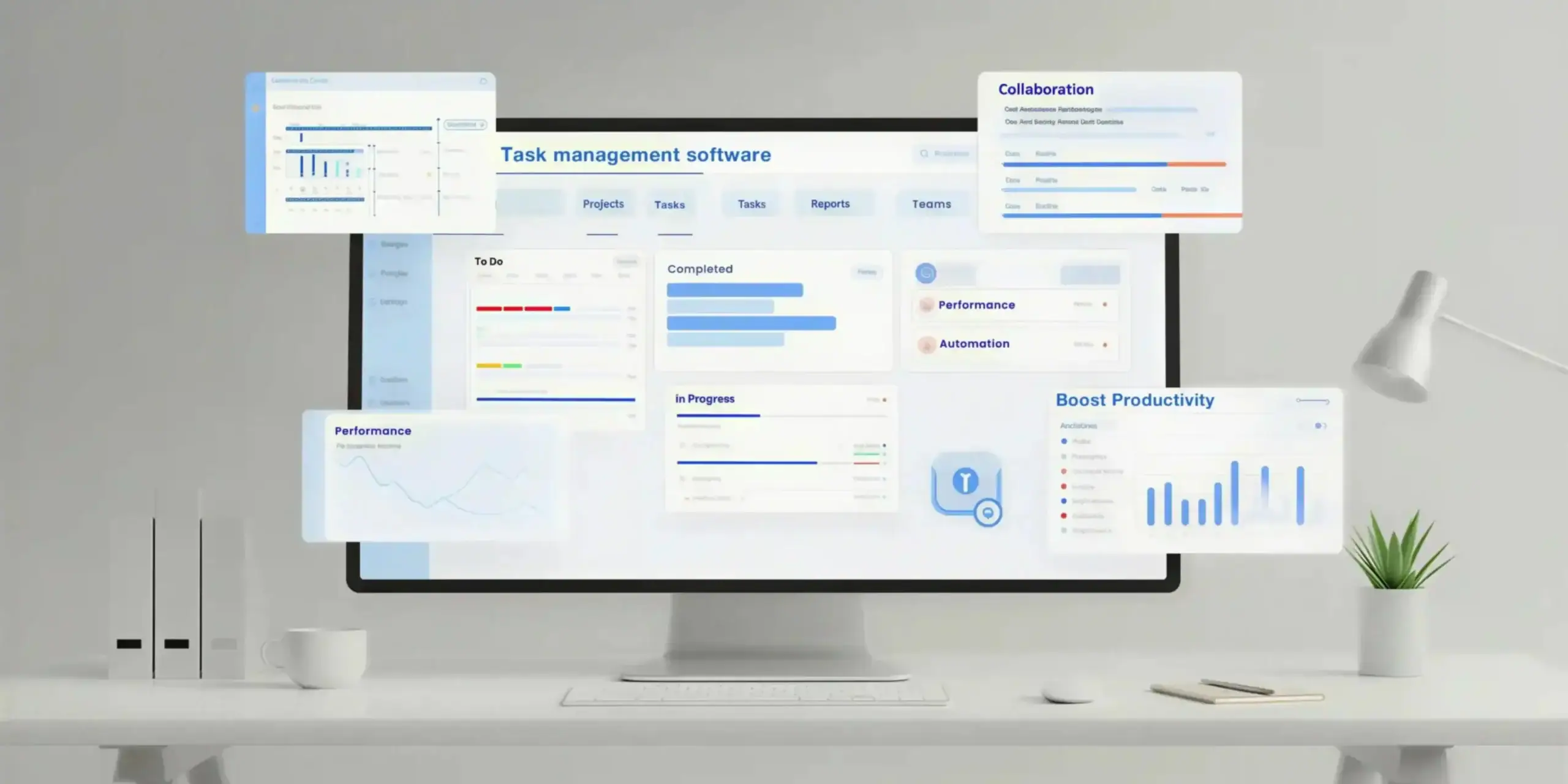
Task management software enables a team to monitor the progress, assign tasks, and also track the deadlines.
Read More: How to Select Task Management Software for Effective Team Management
Workday Planning Systems (Daily and Weekly Planning)
How It Works
Organized planning is either made at the start or the end of each day and week.
Why It Works
Planning brings about clear-cut and less reactive work patterns. Harvard Business Review insists on the importance of planning in enhancing the efficiency of the execution.
When to Use
- At the beginning of the working day.
- At the start of every single week.
Workplace Example
On Monday, a project manager specifies the goals that should be achieved weekly, and every Friday, he/she reviews the progress to prevent discrepancies.
Practical Implementation Insights
These time management techniques help professionals take control of their workday by improving focus, prioritization, and execution. In order to successfully use it, the professionals must:
- Integrate various techniques (e.g., time blocking and task batching).
- Correlate techniques and role specifications.
- Review and optimize processes on a regular basis.
- Add digital tools in order to coordinate them.
- Be flexible to work loads that are dynamic.
Modern time management at work does not involve hard-and-fast scheduling but rather the development of structure that facilitates efficiency, focus, and flexibility.
Conclusion
In an era defined by constant connectivity and increasing demands, mastering time and work management is essential for sustained professional success. The eight techniques outlined above provide a structured, research-backed approach to improving productivity, enhancing focus, and optimizing workflows.
By integrating these time management techniques into daily routines, professionals can transition from reactive task handling to strategic work execution. The result is not only improved performance but also a more controlled, balanced, and effective workday.
Adopting these practices is no longer optional—it is a necessity for thriving in the modern workplace.

- 8 Proven Time Management Techniques to Take Control of Your Workday - April 9, 2026
- How to Create a Daily Task Tracker Software System - March 21, 2026
- Best AI Project Management Tools in 2026: Expert Picks - March 7, 2026