
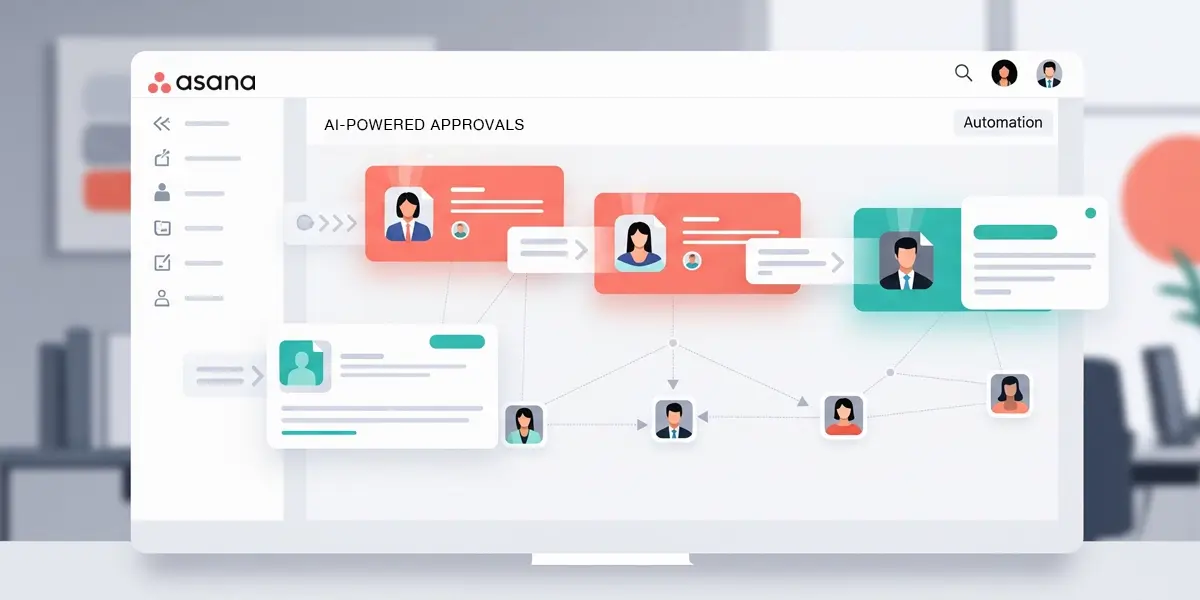
While everyone talks about smarter operations, is your company genuinely becoming more productive?The majority of expanding organisations silently grapple with these important issues. Documents still move slowly, and progress continues to depend on manually tracking down the right person for approvals. Even after purchasing contemporary tools, teams continue to follow up nonstop. This is precisely the point at which Asana's AI-powered document management workflow began to show results.
Asana becomes more than just a task tracker when used properly. It becomes a dynamic system where decisions are no longer trapped in inboxes, documents flow smoothly, and approvals occur on schedule. Let’s dissect how it works so companies can achieve their goals, especially when paired with
Why Document Approvals Still Slow
Most organisations already use digital tools. Yet approvals continue to feel manual. Why? Because many document processes still depend on people remembering what to do next. Team members upload files, tag the relevant authority, and it awaits approval. In a real-world scenario, this is followed by countless follow-ups and pending messages, ultimately leading to slipping timelines.
Even the best tools cannot perform well without a clear document management structure. Approvals need defined ownership, logical steps, clear timing, and accountability to work smoothly. This is where Asana, when paired with AI-driven workflows, changes how work flows across teams.
Read More:
What AI-Powered Document Approvals Actually Mean
Let us clear one thing first: AI-powered approvals are not about replacing people, but rather about reducing friction. Instead of asking, “Has this been approved yet?” the system already knows and acts accordingly. Sounds useful, right? In Asana, AI-enabled workflows help teams:
- Route documents automatically to the right approvers
- Flag delays before they become problems
- Suggest next actions based on workflow context
- Reduce manual status tracking
- Maintain consistency across teams and departments
Why Document-Centric Workflows Benefit from Asana
It is a tool that emphasises clarity by displaying tasks, owners, deadlines, and dependencies. Approvals cease to be discrete actions and become a part of a linked workflow when documents are integrated into this structure. However, this is not established automatically as it needs intelligent automation and careful setup.
Asana enables teams to:
- Directly attach documents to approval tasks
- Clearly define the stages of approval
- Keep track of versions without getting confused
- Ensure departmental accountability
- Maintain approvals in line with delivery schedules
The Role of AI in Smarter Approval Workflows
Document reviews and outdated document management systems have long been a thing of the past, but to truly leverage the power of automated workflows, you need next-gen intelligence. This is where AI becomes practical, resulting in optimal speed and predictability that most teams actually want.
AI in Asana workflows helps by:
- Identifying bottlenecks based on past patterns
- Recommending workflow improvements
- Automating reminders intelligently, not randomly
- Adapting workflows as processes evolve
- Reducing manual intervention without losing control
Why Partnering Matters More Than Tools
Here is a fact: Asana alone will not fix broken workflows.
Tools enable your business to automate, whereas partners design the workflows that you actually need. Without this, teams often miss powerful features. Businesses get real results by working with specialists who understand both the platform and business operations.
The right service provider brings:
- Process understanding
- Asana implementation experience
- AI workflow design skills
- Change management support
- Ongoing optimisation
Read More:
Skills to Look for in an Asana Implementation Partner
When assessing service providers, particularly for AI-powered document approvals, these are the skills that truly make a difference.
| Expert Skills | How It Impacts Businesses |
| Workflow design expertise | A strong partner designs approval workflows that match how decisions actually happen in your organisation. This removes unnecessary steps, reduces delays, and prevents teams from working outside the system. Over time, approvals become faster, clearer, and far more consistent. |
| AI driven automation | Thoughtful use of AI helps prioritise approvals, flag risks, and reduce repetitive effort without overwhelming users. Businesses save time while still keeping human judgement where it matters. This balance improves efficiency without losing trust in the process. |
| Asana AI Studio knowledge | Knowing how to build and manage workflows inside Asana AI Studio ensures automation is stable and scalable. Businesses avoid half-built solutions that break under real usage. This leads to reliable document approvals that teams can depend on daily. |
| Change enablement | Even the best setup fails if teams do not adopt it. A good partner guides users through training, communication, and gradual rollout. This builds confidence, reduces resistance, and ensures the platform is actually used as intended. |
| Scalability planning | Well planned workflows grow with the business instead of becoming bottlenecks. As volumes increase or teams expand, the system continues to perform smoothly. This protects your investment and supports long-term operational growth. |
Together, these skills turn an Asana implementation into a long-term business enabler rather than a short-term configuration exercise.
Common Mistakes Businesses Make
Have you seen approvals become slower after automation? That usually means the process was not designed properly. Let us be practical. Many organisations struggle not because Asana is limited, but because of avoidable mistakes like:
- Over-automating without clarity
- Ignoring approval ownership
- Treating AI as a shortcut
- Designing workflows without user input
- Skipping training and optimisation
What a Well-Designed Approval Workflow Looks Like
In a well-designed Asana workflow, documents progress through defined steps, with the right people automatically involved at each stage, removing the need for repeated follow-ups or uncertainty. As a result, approvers do not have to hunt for context, as they know exactly what needs attention, why it matters, and by when. If something slows down, the system flags it early, before deadlines slip or frustration builds.
In a system with such checks and balances, no files disappear into email threads, and pending approvals are never lost in the vast system. This is where the real shift happens, as teams stop chasing status updates and start trusting the process. Work moves faster because everyone knows the system has their back. That trust is what turns a workflow from a tool into a habit.
Conclusion
AI-powered document approvals work best when technology, process, and people align. Addrs Labs brings deep experience in Asana implementation, AI Studio, workflow automation, and digital transformation, helping organisations design approval workflows that actually work in the real world.



Comments (0)
No comments posted yet. Be the first to comment!