
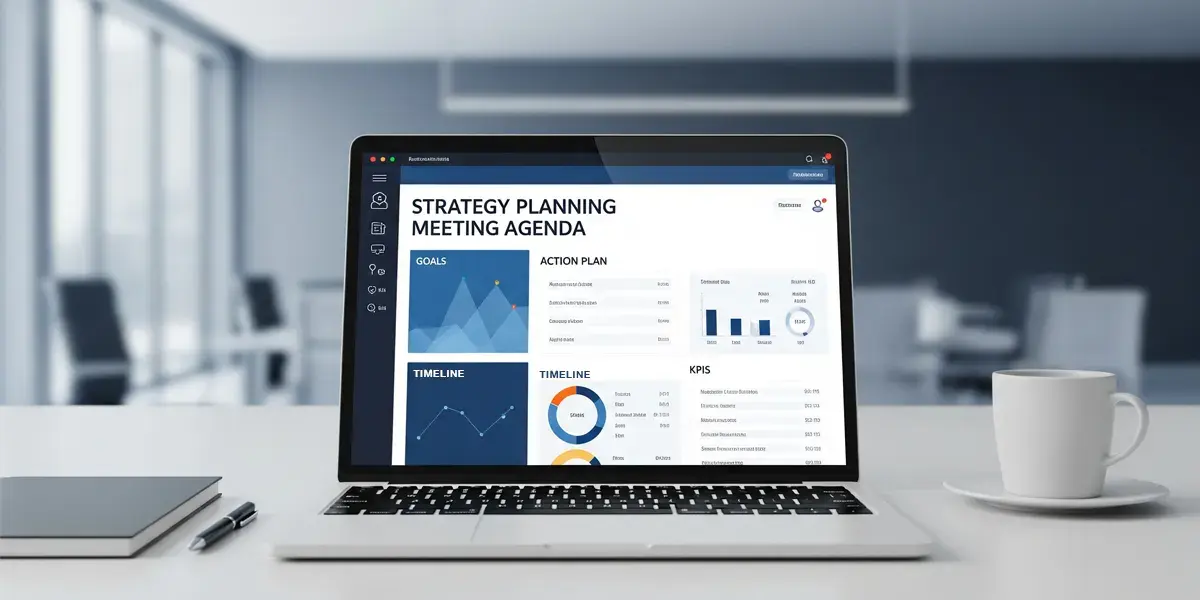
For creating a smooth workflow in the organisation it is important to strategise your meeting agenda’s which helps in achieving desired results.
A strategy planning meeting agenda, helps you create a future roadmap for organisation’s overall growth and helps in aligning tasks as well.
To ensure proper strategic planning is being done it is important to align your meeting agendas in advance which ensures a smoother workflow and systematic approach towards achieving the desired results.
The strategic planning meeting agenda should precisely consist of all goals and objectives which are to be discussed in the meeting for effective task management system and smoother working.
In this blog, we will focus on how to strategically plan your meetings and review a template for a Strategy Planning Meeting Agenda.
Why does Strategy Planning Matter
A strategic planning meeting agenda helps organisations and startups in :
- Creating a long-term vision for the organisation.
- Aligning goals for the organisation with achievable deadlines
- Task allocation to team members
- Build a clear and transparent vision
- Create a workflow structure and task assignment.
When the above-mentioned things are taken care of, then the organisation can excel in strategic planning and development.
How to Strategically Plan and Prepare Your Meetings
Before attending any meetings, it is crucial to prepare a meeting agenda to ensure a smooth working process.
• Set the meeting objectives
Having structured and detailed meeting objectives helps you set goals and plan upcoming initiatives for the organisation.
• Share the meeting SOP in advance with your organisation
Sharing the meeting SOP and data for discussion in the meeting helps in structuring a smooth workflow and accountability within the organisation.
• Simplified Task Allocation
It is essential to allocate tasks to team members to ensure a smooth workflow and transparency within the team. With task allocation, the team can work more effectively, and progress can be tracked.
• Clear Rules for Working
Effective working rules support time management and efficient work, which in turn contribute to the company’s growth.
A concise Template for a Strategy Planning Meeting Agenda
Meeting Title: Strategic Planning Meeting
Date: _______
Time: _______
Name Of Facilitator: _______
Name of all Participants: _______
The basic details about the Meeting title, date, and participants of the strategic planning meeting should be provided to ensure meetings are well-organised.
1. Discussing Meeting Objectives (5–10 minutes)
- Brief introduction to the Meeting strategy
- Brief overview of the set targets and goals
- Review of the past work
2. Review of Previous Performance (20–30 minutes)
- Key milestones
- Working gaps
- Areas of improvement
- Learning strategy
While reviewing past performance, it is crucial to note any mistakes, so that future tasks can be aligned and work quality is not compromised.
3. Industry Research Scanning (30–45 minutes)
- Having a SWOT Analysis (Strengths, Weaknesses, Opportunities, Threats)
- Understanding the Market/industry trends
- Keeping an eye on Competitor movements
- Understanding your organisation’s challenges
Having an overview of current market trends can help you identify gaps in your work and inform better strategic development.
4. Future Roadmap and Goal Setting (30–60 minutes)
- Align and allocate upcoming projects
- Work on the organisation’s gaps
- Set internal meetings to create a workflow.
By creating and setting up internal meetings, you can help manage teams effectively and allocate tasks more efficiently by identifying gaps.
5. Setting up the effective Action Planning (45–60 minutes)
For each strategic plan :
- Define your Key projects
- Allocate the Responsibilities to your team members
- Create one point of contact for every project
By creating a plan of action and appointing one team leader for each project goal, it establishes a transparent and functioning model within the organisation, reducing the likelihood of conflict.
6. Risk Assessment & Mitigation Factors (20 minutes)
- Identify potential task risks
- Creating an impact assessment report
- Discussing mitigation strategies for effective work
Estimating risks helps to have a better future outlook on deadlines and projects to be completed.
7. Final Decisions (10–15 minutes)
- key decisions to be informed
- Confirm the project details
- Inform of the future expectations
The final decisions should be discussed to ensure that everybody is well aware of their responsibilities as discussed in the planning strategy.
8. Open-ended Discussion (10 minutes)
- Feedback from attendees
- Doubt resolving session
The open-ended discussion helps in creating healthy functioning within an organisation, which is important for good workflow and to enhance productivity as well.
Tips for a Highly Effective Strategic Planning Meeting
- Ensure weekly or bi-weekly discussions for creating a smooth workflow.
- Ensure the active participation of all members for a better understanding of the project.
- Discuss all the required and relevant key pointers.
- Utilise work management tools to enhance productivity within the organisation.
- Share the meeting minutes to ensure transparency in the work
Conclusion
A strategic planning meeting agenda helps an organisation manage work effectively and creates a systematic workflow within the organisation.
With a clear set of agenda’s you can plan your work effectively and ensure there is no conflict within the organisation in terms of task management.




Comments (0)
No comments posted yet. Be the first to comment!